Accounting in the Dark: The Federal Budget Tricks That Keep Congress — and Taxpayers — Guessing
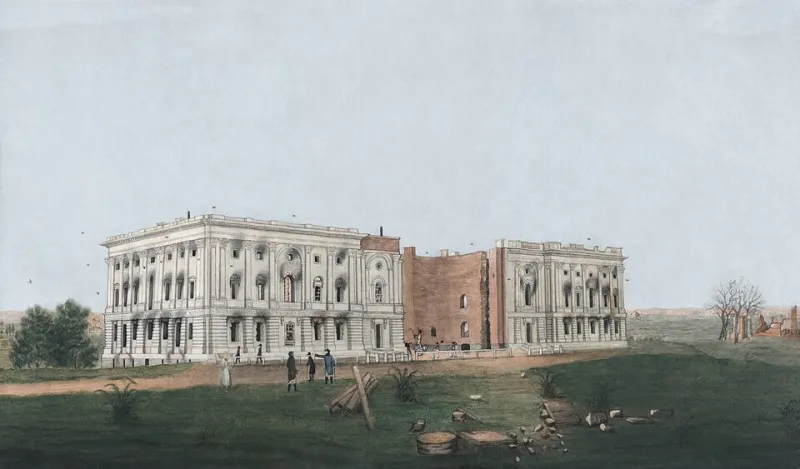
Photo: George Munger, Public domain, via Wikimedia Commons
Every year, the federal government publishes a budget that runs to thousands of pages. It is presented as the definitive record of how Washington intends to spend public money. Former congressional budget staffers, however, describe it as something closer to a curated highlight reel — detailed enough to satisfy routine scrutiny, yet deliberately structured to obscure the transactions that matter most.
A DOE News investigation into federal appropriations practices has found that a constellation of mechanisms — ranging from classified "black budget" line items to obscure reprogramming authorities and intra-agency transfer accounts — allows departments to relocate substantial sums with little to no meaningful review from the legislative branch charged with controlling the national purse.
The Architecture of Opacity
The U.S. Constitution is unambiguous on the matter: Congress holds the power of the purse. In practice, that power has been steadily hollowed out over decades through statutory carve-outs, executive interpretations, and the sheer complexity of a federal budget that now exceeds $6 trillion annually.
One of the least-examined instruments is the "working capital fund," an internal revolving account that agencies use to finance administrative services. Because these funds are replenished by charges to other appropriations rather than through direct congressional allocation, they can accumulate and redistribute tens of millions of dollars without triggering the standard appropriations process. The Department of Homeland Security, the Department of Defense, and the Department of Health and Human Services all operate working capital funds of significant scale.
"They function like internal banks," said one former Office of Management and Budget analyst who spoke on condition of anonymity due to ongoing consulting relationships with federal agencies. "Money flows in from a dozen different program accounts, gets pooled, and flows back out — and at no point does any individual congressman have a clear line of sight to the full picture."
Beyond working capital funds, agencies routinely exploit "reprogramming" authority — the ability to shift money between accounts within an approved budget. Reprogramming thresholds, which determine when congressional notification is required, have not been meaningfully updated at many agencies in years. At the Department of Defense alone, internal audits reviewed by DOE News indicate that hundreds of millions of dollars are reprogrammed annually, with formal congressional notification triggered in only a fraction of cases.
The Black Budget and Its Civilian Cousins
The intelligence community's classified appropriations — collectively known as the "black budget" — are the most widely acknowledged form of congressional blind spot. The total figure is disclosed in aggregate each year, but the program-level breakdown remains secret. In fiscal year 2023, the National Intelligence Program budget was disclosed at approximately $67.9 billion, with the Military Intelligence Program adding tens of billions more. What those dollars fund, precisely, is known in full to fewer than a hundred people in Washington.
Less discussed, however, are the quasi-classified spending mechanisms that exist outside the intelligence community. The Department of Energy's National Nuclear Security Administration operates programs whose cost structures are partially shielded from full public disclosure under national security exemptions. The Defense Advanced Research Projects Agency funds research initiatives that are publicly listed but whose budget allocations are described in language so technical and fragmented that even experienced appropriators acknowledge difficulty tracking expenditures from authorization to outcome.
Anne Khademian, a scholar of federal bureaucracy who spent years studying agency budget behavior, has described this phenomenon as "structured ambiguity" — the deliberate use of complexity not to hide wrongdoing necessarily, but to insulate program managers from accountability. "It is not always malicious," she has noted in published research. "Sometimes it is institutional self-preservation. But the effect on democratic oversight is the same."
Watchdogs With Clipped Wings
The Government Accountability Office and the various inspectors general across the executive branch are the principal mechanisms by which Congress attempts to monitor federal spending after the fact. Both institutions, however, operate under constraints that limit their reach.
The GAO can investigate only what it is directed to examine by congressional request or statutory mandate. Agencies are not required to proactively flag unusual financial activity for GAO review. Inspectors general, meanwhile, report to the very agency heads they are tasked with scrutinizing — a structural conflict that multiple watchdog advocacy groups, including the Project On Government Oversight, have flagged repeatedly as fundamentally incompatible with genuine independence.
In 2020, the Trump administration's removal of several inspectors general in rapid succession drew widespread criticism but also illustrated how fragile the oversight architecture actually is. The positions were eventually filled, but the episode exposed the degree to which watchdog capacity depends on executive branch cooperation.
The Reform Conversation Washington Won't Have
Proposals to tighten congressional control over federal spending are not new. The Impoundment Control Act of 1974 was itself a response to executive overreach in budget execution. Yet the mechanisms identified in this investigation have largely survived subsequent reform efforts, partly because they serve the operational interests of agencies, and partly because many members of Congress find value in the ambiguity — it provides political cover when unpopular programs require funding.
Several former budget officials interviewed by DOE News expressed skepticism that comprehensive reform is politically achievable in the current environment. "The incentive structure cuts against transparency," one said. "Agencies want flexibility. Leadership wants deniability. And the appropriators who could fix it are often the same people who negotiated the loopholes in the first place."
For ordinary taxpayers, the practical consequence is straightforward: a meaningful portion of the federal budget — the precise figure is, by design, unknowable — moves through channels that neither the public nor most elected officials can track with any precision. The government publishes a budget. What it spends is a different document entirely, and that document is not available to the public.