The Most Powerful Officials You've Never Heard Of: Secretary of State Races Are Reshaping Election Administration
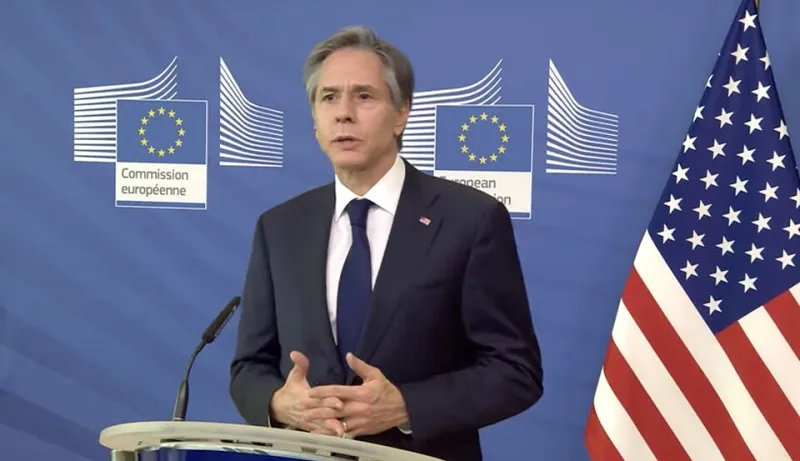
Photo: Published by the European Commission at https://www.youtube.com/watch?v=HuJcQrkKaB4 under Creative Commons Attribution license (reuse allowed), CC BY-SA 3.0, via Wikimedia Commons
An Office That Rarely Makes the Evening News
Ask most Americans what a Secretary of State does and the answers tend to involve diplomacy, foreign policy, and the State Department. Ask them which candidate is running for the position in their own state, and the silence is usually immediate. It is one of the more consequential blind spots in American civic life—and in 2024, both major political parties are exploiting it aggressively.
Across more than a dozen states holding competitive Secretary of State elections this year, a quiet but fierce contest is underway for control of offices that determine the mechanics of democracy itself: voter registration rules, ballot access procedures, polling place administration, and—as the country learned with jarring clarity in 2020—the certification of election results. The stakes have never been higher, and public awareness has rarely been lower.
"These races have historically been afterthoughts," said Wendy Weiser, vice president for democracy at the Brennan Center for Justice. "That is no longer the case for the people who pay close attention to election law. They understand exactly what these offices can do."
Why This Office Matters More Than Most Voters Realize
The Secretary of State is, in most states, the chief election officer. The specific powers vary by jurisdiction, but they typically include overseeing voter registration databases, certifying candidates for the ballot, setting standards for voting equipment, training county election officials, and—critically—certifying the final results of federal, state, and local elections.
That last function attracted unprecedented national attention when several secretaries of state in battleground states faced intense pressure following the 2020 presidential election to delay or refuse certification of results that showed Joe Biden defeating Donald Trump. Georgia Secretary of State Brad Raffensperger, a Republican, became a nationally known figure precisely because he resisted that pressure and certified his state's results. His willingness to do so was not legally ambiguous—certification is a ministerial duty—but the episode demonstrated that the individual holding the office matters enormously in moments of institutional stress.
Since then, both parties have treated Secretary of State races with a seriousness of purpose that was previously reserved for gubernatorial and U.S. Senate contests. Outside spending, candidate recruitment, and grassroots organizing in these down-ballot races have all increased substantially.
The Key Races to Watch
Several Secretary of State contests in 2024 have emerged as genuine flashpoints in the broader national debate over election administration.
Nevada presents perhaps the most closely watched race. The state has been a perennial battleground at the presidential level, and control of its election administration infrastructure is viewed by both parties as strategically significant. The Democratic incumbent is facing a well-funded Republican challenger who has centered his campaign on concerns about voter roll maintenance and the security of mail-in balloting—issues that resonate with a Republican base still skeptical of 2020 outcomes, but that critics argue are predicated on documented misinformation about election fraud rates.
Arizona, still processing the turbulence of its 2022 Secretary of State race—which itself became a national story—is again fielding candidates with sharply divergent visions of the office's role. The Republican candidate has emphasized reducing early voting windows and tightening identification requirements, while the Democratic candidate has focused on expanding access and modernizing registration infrastructure.
Michigan offers a different dynamic. Democratic Secretary of State Jocelyn Benson, who survived intense scrutiny and legal challenges following 2020, is not on the ballot this cycle, but her office's policies—including aggressive voter registration outreach and expanded absentee voting—have become a central point of contention as the two parties' candidates articulate competing visions for the office's future direction.
The Policy Divide in Plain Terms
Beyond the personalities and the political atmospherics, the Secretary of State races of 2024 reflect a genuine and substantive disagreement about the purpose and priorities of election administration.
Republican candidates in competitive races have broadly coalesced around a platform that emphasizes election security, more frequent voter roll purges, stricter ID requirements, and skepticism toward mail-in voting expansion. They argue that these measures are necessary to maintain public confidence in election outcomes and to prevent fraud—even as independent researchers and federal courts have repeatedly found that large-scale fraud in American elections is exceedingly rare.
Democratic candidates, conversely, have emphasized accessibility, arguing that the primary obligation of a Secretary of State is to remove barriers to participation. Their platforms typically include automatic voter registration, extended early voting periods, expanded drop-box networks, and robust provisional ballot protections.
The contrast is not merely rhetorical. Secretaries of State have real administrative authority to implement these priorities, often without requiring legislative approval. A Republican Secretary of State can direct county officials to conduct more aggressive voter roll maintenance under existing law. A Democratic Secretary of State can issue guidance that makes provisional ballots more likely to be counted. These are not hypothetical powers—they are the routine exercise of executive discretion within the office.
The Money Behind the Down-Ballot Fight
The elevated importance of these races has attracted elevated funding. The Democratic Association of Secretaries of State and its Republican counterpart, the Republican Secretaries of State Committee, have both reported significant increases in fundraising compared to the 2022 cycle. Outside groups—including several with connections to the dark money networks that fund federal races—have also begun directing resources toward these contests.
Some of that spending has come from sources with a direct financial interest in election outcomes. Voting technology vendors, for instance, have donated to candidates in states where major equipment contracts are pending. That intersection of commercial interest and electoral authority has drawn scrutiny from government ethics organizations, though it remains largely legal under current campaign finance frameworks.
The Certification Question Endures
Perhaps the most consequential—and contested—dimension of the Secretary of State debate concerns the certification process itself. Following 2020, several state legislatures considered or enacted legislation that would alter the circumstances under which certification can be delayed or refused. Legal scholars have largely concluded that such measures are constitutionally problematic, but the question of administrative discretion in the certification process remains an active area of litigation and academic debate.
In this environment, the identity and institutional philosophy of the individual holding the Secretary of State's office in a competitive state carries implications that extend well beyond routine administrative competence. A contested presidential election in 2024 or 2028 could once again place these officials at the center of a national crisis—and the decisions made in down-ballot races this November will determine who occupies those seats.
"Voters tend to focus on the top of the ticket," said Barry Burden, director of the Elections Research Center at the University of Wisconsin-Madison. "But the people running these offices have enormous discretion over how elections actually function. The gap between public attention and institutional significance is genuinely striking."
For an electorate exhausted by high-stakes political drama, the temptation to overlook the Secretary of State line on the ballot is understandable. The consequences of doing so, however, may prove lasting.