Untraceable Millions: The Shadow Donors Quietly Deciding Who Controls Congress
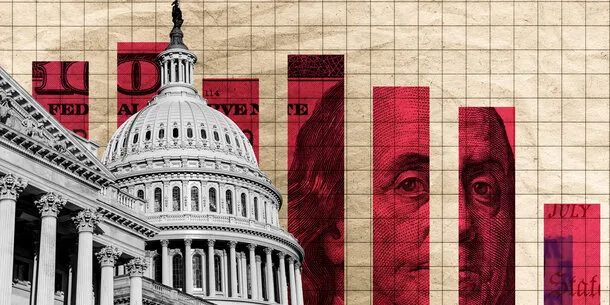
Photo: dark money political campaign finance US Congress dollars shadow, via www.brennancenter.org
The Money Nobody Can See
In the final stretch of the 2024 election cycle, a quiet financial war is being waged inside a handful of congressional districts most Americans couldn't locate on a map. Swing seats in Arizona's 6th, Pennsylvania's 7th, and Michigan's 8th have become financial battlegrounds—not primarily between candidates, but between opaque funding networks operating largely beyond the reach of public disclosure laws.
The mechanism is not new, but its scale in 2024 has reached levels that alarm campaign finance watchdogs across the political spectrum. Dark money—funds channeled through 501(c)(4) nonprofit organizations that are legally prohibited from disclosing their donors—has poured into congressional races at a pace that is outstripping even the record-breaking totals of the 2022 midterms. According to data compiled by OpenSecrets, dark money expenditures in competitive House and Senate contests have already surpassed $1.2 billion in disclosed independent expenditures alone, with the true figure almost certainly far higher.
"What voters are seeing on their televisions and in their mailboxes is the product of financial decisions made in boardrooms and legal offices they will never have access to," said Adav Noti, executive director of the Campaign Legal Center. "That's not a partisan observation. That's a structural problem."
How the Architecture Works
Understanding how dark money operates requires a brief tour through the legal scaffolding that makes it possible. After the Supreme Court's 2010 Citizens United ruling, corporations and other organizations gained the right to spend unlimited sums on political advocacy, provided they did not coordinate directly with campaigns. The subsequent rise of 501(c)(4) "social welfare" organizations—which can engage in political activity as long as it is not their "primary purpose"—created a vehicle through which donors could influence elections without ever appearing in a public filing.
These nonprofits frequently donate to super PACs, which do disclose their donors—but by that point, the original source of the money has been effectively laundered through layers of organizational structure. The super PAC reports receiving a contribution from, say, "American Prosperity Fund LLC," but that entity may itself be funded by a consortium of corporations, hedge funds, or wealthy individuals whose names never appear anywhere accessible to the public.
In the 2024 cycle, several specific networks have drawn the attention of researchers. On the right, organizations linked to the network formerly associated with Charles Koch—now operating under the umbrella of Stand Together—have continued to deploy resources in races where they believe libertarian-leaning or fiscally conservative messaging can peel away independent voters. On the left, groups connected to the Sixteen Thirty Fund, a fiscal sponsorship organization that has served as a hub for progressive dark money, have funded issue advocacy campaigns in suburban districts targeting voters on healthcare and reproductive rights.
Both networks have adamantly maintained that their activities are legal and constitute protected political speech.
Swing Districts Under the Microscope
The practical consequences of this spending are most visible in the tightest races. In Pennsylvania's 7th Congressional District, a seat that political forecasters rate as a true tossup, outside spending from undisclosed sources has already eclipsed the combined fundraising totals of both major-party candidates. Voters in the district have been subjected to a sustained advertising blitz focused almost exclusively on crime statistics and economic anxiety—themes that, researchers note, align closely with the documented messaging priorities of several right-leaning dark money organizations active in the region.
In Arizona's 6th District, the dynamic has run in the opposite direction. A progressive-aligned 501(c)(4), Arizonans for a Stronger Future, spent approximately $4.3 million on issue ads spotlighting abortion access and Medicare—without disclosing a single donor. State campaign finance filings confirm the organization's existence but reveal nothing about its funding sources.
The effect on candidate behavior is measurable. Political scientists who study congressional races have documented a consistent pattern: candidates in races with heavy dark money involvement tend to moderate or sharpen their public positions in ways that mirror the issue framing deployed by the outside groups operating on their behalf. While direct coordination is illegal, the alignment of messaging is often striking.
"You don't need a phone call," explained Michael Franz, a professor of government at Bowdoin College who studies political advertising. "Candidates and their aligned outside groups often share consultants, data, and strategic assumptions. The firewall between them is real in a legal sense but porous in a practical one."
The Disclosure Debate
Efforts to mandate greater transparency have repeatedly stalled in Congress. The DISCLOSE Act, which would require 501(c)(4) organizations to reveal donors who give more than $10,000, has passed the House in multiple sessions only to die in the Senate. Opponents argue that forced disclosure chills free speech and exposes donors to harassment. Proponents counter that voters have a fundamental right to know who is attempting to influence their electoral choices.
The Federal Election Commission, meanwhile, has been hamstrung by partisan deadlock. With three Republican-appointed and three Democratic-appointed commissioners, the agency has been unable to reach the four-vote majority required to issue meaningful enforcement guidance on coordination rules or digital advertising disclosure.
State-level efforts have fared somewhat better. California, New York, and several other states have enacted their own disclosure requirements for political nonprofits operating within their borders. But for federal races, the patchwork of state laws provides little coherent accountability.
What Hangs in the Balance
Control of the House of Representatives may ultimately hinge on fewer than a dozen competitive districts. If dark money organizations are successfully shaping voter perceptions in those districts—and the evidence suggests they are—then the composition of the next Congress will have been influenced in part by donors whose identities remain permanently hidden from the electorate.
That reality has implications that extend well beyond partisan preferences. Lawmakers who arrive in Washington having benefited from undisclosed financial support carry with them obligations that are invisible to their constituents. Whether those obligations translate into specific policy outcomes is difficult to prove, but the structural incentive is undeniable.
For voters in swing districts this November, the advertisements, the mailers, and the social media campaigns that shape their impressions of the candidates are, in many cases, the product of a financial ecosystem deliberately engineered to resist scrutiny. DOE News will continue to track these expenditures as new disclosures become available in the weeks ahead.
Campaign finance data cited in this report was drawn from Federal Election Commission filings, OpenSecrets.org, and FollowTheMoney.org. All organizations named were contacted for comment prior to publication.