Insiders at the Controls: When Corporate America Moves Into Federal Agencies and Writes Its Own Rules

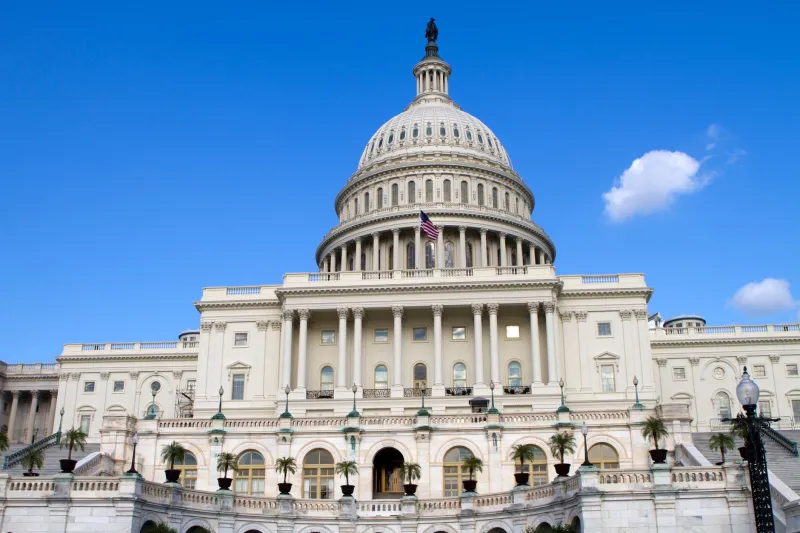
Photo: corporate executive government office meeting federal agency policy, via aicertswpcdn.blob.core.windows.net
For decades, the dominant concern about the relationship between corporations and federal regulators centered on what happened after government service ended — the lobbyist who used to run the agency, the consultant whose Rolodex was built on a career in public service. That phenomenon, widely described as the revolving door, generated congressional hearings, ethics rules, and no shortage of editorial outrage.
But a quieter and arguably more consequential arrangement has been unfolding in the opposite direction. Companies are not merely waiting for regulators to retire and come to them. In growing numbers, they are sending their own people inside federal agencies while those executives remain on corporate payrolls, placing them in positions where they help draft the regulations, set the enforcement priorities, and shape the technical standards that will ultimately govern their own employers.
The legal vehicle for this arrangement is a designation most Americans have never encountered: the Special Government Employee, or SGE. Created by statute in 1962, the classification allows private-sector individuals to serve in an advisory or consultative capacity for the federal government for up to 130 days per year. The arrangement carries a government title, access to sensitive deliberative processes, and, in many cases, meaningful input into regulatory outcomes — while the individual's primary financial allegiance remains with a private employer.
A Legal Gray Area With Real Consequences
The SGE designation was designed with legitimate purposes in mind. Federal agencies often lack the in-house technical expertise to evaluate rapidly evolving industries, and drawing on outside specialists can fill genuine knowledge gaps. The Food and Drug Administration, for instance, relies heavily on advisory committees populated in part by scientists and clinicians who hold consulting arrangements with pharmaceutical companies.
But the structure of the arrangement creates a conflict of interest that existing disclosure rules do not adequately address. An SGE who helps craft a drug approval framework while simultaneously advising a company seeking approval under that framework occupies a position that would be impermissible in almost any other professional context. Waivers exist to permit such service when an agency determines that the individual's expertise outweighs the conflict — but those waiver determinations are made internally, with limited external review and inconsistent public disclosure.
At the Environmental Protection Agency, industry-affiliated advisors have participated in scientific review panels that set the evidentiary standards for chemical risk assessments. At the Department of Transportation, technical consultants with ties to automotive manufacturers and airline operators have contributed to safety rulemaking processes. In each case, the agency retains formal decision-making authority — but the substance of what gets decided is shaped, often substantially, by the analysis and recommendations those advisors provide.
The Architecture of Influence
What distinguishes this mechanism from conventional lobbying is its structural intimacy with the regulatory process itself. A lobbyist submits comments during a public notice-and-comment period, attends meetings with agency staff, and works through the standard channels of external advocacy. An SGE sits inside those channels. They attend internal deliberations, review draft documents before they are made public, and contribute language that may appear in final rules — all while their employer's competitive interests remain directly implicated in the outcome.
Former agency officials who spoke with DOE News described the dynamic in terms that suggest the concern is not merely theoretical. One former senior EPA official, who requested anonymity to speak candidly about internal processes, recalled advisory committee sessions in which industry-affiliated participants consistently steered technical discussions toward methodologies that happened to align with their employers' regulatory preferences. "They weren't being dishonest about their affiliations," the official said. "But they were framing every question in a way that made their preferred outcome look like the scientifically neutral one."
The FDA's advisory committee system has drawn particular scrutiny from academic researchers who study regulatory capture. A 2022 analysis published in a peer-reviewed journal found that committee members with disclosed financial ties to pharmaceutical companies voted to recommend drug approvals at a measurably higher rate than members without such ties — even after controlling for the scientific characteristics of the applications under review. The FDA disputed the study's methodology, but did not contest its underlying data.
What the Records Show
Public records obtained through Freedom of Information Act requests reveal that the volume of SGE appointments has grown substantially over the past two decades, tracking the expansion of federal regulatory activity in technology, energy, finance, and life sciences. Across the EPA, FDA, and DOT alone, the number of active SGE designations in any given year now runs into the thousands, though the agencies do not publish comprehensive rosters and the waiver determinations that permit conflicted service are not systematically disclosed to the public.
The Office of Government Ethics maintains oversight responsibility for SGE conduct, but its enforcement capacity is limited and its jurisdiction does not extend to the substantive quality of waiver decisions made by individual agencies. Congressional oversight committees have periodically requested information about SGE appointments, but those requests have historically been met with incomplete responses and assertions of deliberative process privilege.
Some agencies have moved toward greater transparency on their own initiative. The FDA now publishes financial disclosure information for most advisory committee members, and the EPA's Science Advisory Board maintains a public roster with general affiliation information. But critics argue these disclosures fall short of what is needed — they identify who holds conflicts, but do not reveal the specific regulatory questions on which conflicted advisors were permitted to participate.
The Lobbying Comparison
The scale of influence at stake makes the comparison to conventional lobbying instructive. The lobbying industry spent approximately $4.1 billion in 2023 attempting to shape federal policy from the outside. The SGE mechanism offers something that money cannot straightforwardly purchase through traditional advocacy: a seat at the table during the drafting phase, before positions harden and public scrutiny intensifies.
That access has economic value that is difficult to quantify but easy to understand. A company whose affiliated advisor helps define the technical criteria for a regulatory threshold is not merely influencing policy — it is potentially writing a standard calibrated to its own capabilities and competitive position, one that will bind its rivals equally.
Reform Proposals and Their Limits
A handful of reform proposals have circulated in policy circles, ranging from mandatory cooling-off periods that would bar SGE participants from working on matters affecting their employers, to real-time public disclosure of all waiver determinations, to congressional review requirements for appointments in high-conflict categories. None has advanced to enactment.
The obstacle is partly political — industries that benefit from the current arrangement have obvious incentives to resist reform — and partly structural. Agencies genuinely need outside expertise, and overly rigid conflict rules risk excluding the most knowledgeable specialists from public service entirely. The challenge is designing a system that captures genuine expertise without surrendering the independence that gives regulatory determinations their legitimacy.
What is clear is that the current framework was not designed for an era in which the technical complexity of regulated industries routinely outpaces the internal capacity of the agencies responsible for overseeing them. The gap between what agencies know and what they need to know has become a corridor through which corporate influence travels with minimal friction and even less visibility.
Until that gap is addressed — through sustained investment in agency expertise, meaningful conflict-of-interest enforcement, or both — the most consequential regulatory decisions in America may continue to be shaped, in part, by the very interests those decisions are meant to constrain.