Hired by the Enemy's Ally: How American Power Brokers Are Selling Access Back to Washington
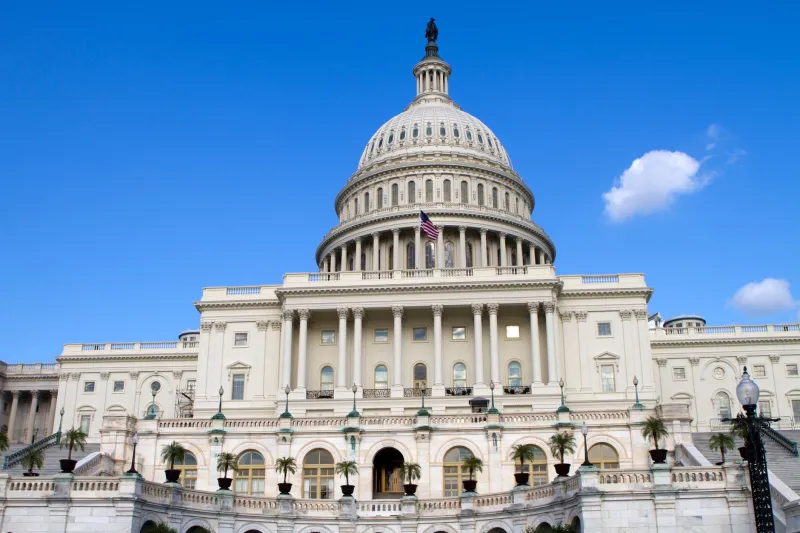
When a former United States senator leaves office, the public generally assumes that the influence they accumulated over decades of service belongs, in some fundamental sense, to the American people. The relationships forged in committee rooms, the private cell numbers stored in their contacts, the instinctive understanding of how Washington actually operates — these are the byproducts of a career funded by taxpayers. What happens when those assets are quietly sold to a foreign government?
The answer, according to a DOE News investigation, is: remarkably little, legally speaking.
Across Washington's vast ecosystem of consulting firms, strategic advisory groups, and geopolitical risk companies, a growing number of former American politicians, senior military officers, and retired intelligence operatives are accepting substantial contracts from foreign governments or their designated agents. The work is often framed as benign — market analysis, policy briefings, investment guidance. But critics and ethics watchdogs argue the practical effect is something far more consequential: the systematic privatization of American governmental expertise for the benefit of overseas powers.
The Architecture of Access
The legal framework governing this activity is, at best, a patchwork. The Foreign Agents Registration Act, known as FARA, requires individuals who work on behalf of foreign principals to register with the Department of Justice and disclose their activities. On paper, it sounds robust. In practice, enforcement has been historically anemic, exemptions are broad, and the definition of what constitutes "political activities" — the threshold that triggers registration — has been interpreted narrowly enough to exclude substantial categories of advisory work.
The result is a disclosure landscape riddled with gaps. A former congressman who advises a Gulf state sovereign wealth fund on U.S. regulatory trends may never file a FARA registration if the engagement is structured as "economic consulting" rather than explicit political advocacy. A retired three-star general retained by a Central Asian government to offer assessments of Pentagon procurement priorities may operate entirely outside public view if the arrangement is routed through a domestic intermediary firm.
"The law was designed for a different era," said one former senior Justice Department official who requested anonymity due to ongoing advisory work in the private sector. "The assumption was that foreign influence would look like propaganda or direct lobbying. What it looks like now is a retainer agreement and a quarterly dinner in Georgetown."
The Financial Networks Behind the Curtain
The money involved is not trivial. DOE News reviewed publicly available FARA filings, financial disclosures, and corporate registration records across multiple jurisdictions and found a consistent pattern: former officeholders frequently enter into consulting arrangements that pay between $30,000 and $150,000 per month, with some engagements structured as equity stakes in advisory firms rather than direct payments — a mechanism that further complicates disclosure requirements.
Several of the foreign governments most active in this space are not traditional American adversaries. Saudi Arabia, the United Arab Emirates, Qatar, Turkey, and Azerbaijan have each been identified in public filings or investigative reporting as clients of firms employing former U.S. officials. The engagements span party lines with conspicuous evenhandedness — both Republican and Democratic alumni appear in the client rosters of major strategic advisory firms.
In some cases, the intermediary structure adds additional layers of opacity. A foreign government hires a domestic public relations or consulting firm, which in turn retains a former official as a "senior advisor." The former official's name never appears in a FARA filing because their formal client is an American company, not a foreign principal. The foreign government, meanwhile, gains access to someone who can pick up the phone and reach a sitting cabinet secretary.
What "Consulting" Actually Looks Like
Former officials contacted for this article uniformly described their work in careful, anodyne terms: providing strategic context, facilitating introductions, helping foreign clients understand the American regulatory environment. None agreed to be quoted by name.
But internal communications reviewed by DOE News from one such engagement — obtained through a source with direct knowledge of the arrangement — paint a more pointed picture. In one exchange, a former senior intelligence official is asked by a client government's representative to assess the likelihood that a specific congressional committee would advance legislation unfavorable to that government's state-owned energy company. The official's written response runs to four pages and includes an analysis of individual committee members' political vulnerabilities, their campaign finance dependencies, and suggested messaging strategies.
That document was never disclosed publicly. The official in question has not filed a FARA registration.
The Conflict of Interest No One Is Tracking
Perhaps the most underexamined dimension of this phenomenon is the potential for conflicts of interest that extend well beyond the individuals involved. Former officials who retain security clearances — a privilege that persists for years after leaving government service — are subject to certain restrictions, but oversight of how they use cleared-level knowledge in private consulting contexts is widely acknowledged to be inadequate.
Furthermore, many former officials remain embedded in formal and informal advisory networks that give them ongoing access to current government deliberations. Former secretaries of state sit on think tank boards alongside sitting undersecretaries. Retired generals participate in Pentagon-sponsored war games and advisory panels. The line between their private consulting work for foreign clients and their continued proximity to active U.S. government decision-making is, in many cases, functionally nonexistent.
The Office of Government Ethics maintains post-employment restrictions that prohibit certain former officials from directly lobbying their former agencies for defined cooling-off periods — typically one to two years. But those restrictions do not extend to advising foreign governments on how to navigate or influence those same agencies, provided the advice stops short of formal lobbying contact.
Calls for Reform — and Why They Stall
Reform advocates have proposed a range of remedies: extending FARA registration requirements to cover a broader category of advisory activities, strengthening DOJ enforcement capacity, requiring former senior officials to disclose foreign consulting engagements regardless of how they are structured, and establishing an independent oversight body with subpoena power.
Those proposals have found limited traction on Capitol Hill, a fact that ethics researchers note with grim predictability. The legislators who would need to pass such reforms are, in many cases, the future beneficiaries of the system they would be asked to constrain.
"There is a fundamental collective action problem here," said a government ethics researcher at a nonpartisan policy institute. "The people in a position to close these loopholes are the same people who will one day walk through them. That is not an accident. It is the architecture of the problem."
For now, the revolving door continues to spin — only in this iteration, it does not merely deposit former officials into domestic lobbying shops. It deposits them, often invisibly, into the service of foreign capitals with their own distinct interests, their own strategic imperatives, and their own reasons for wanting a direct line back into Washington.