Silicon Valley's Hired Guns: How Big Tech Turns Ex-Lawmakers Into Legislative Weapons
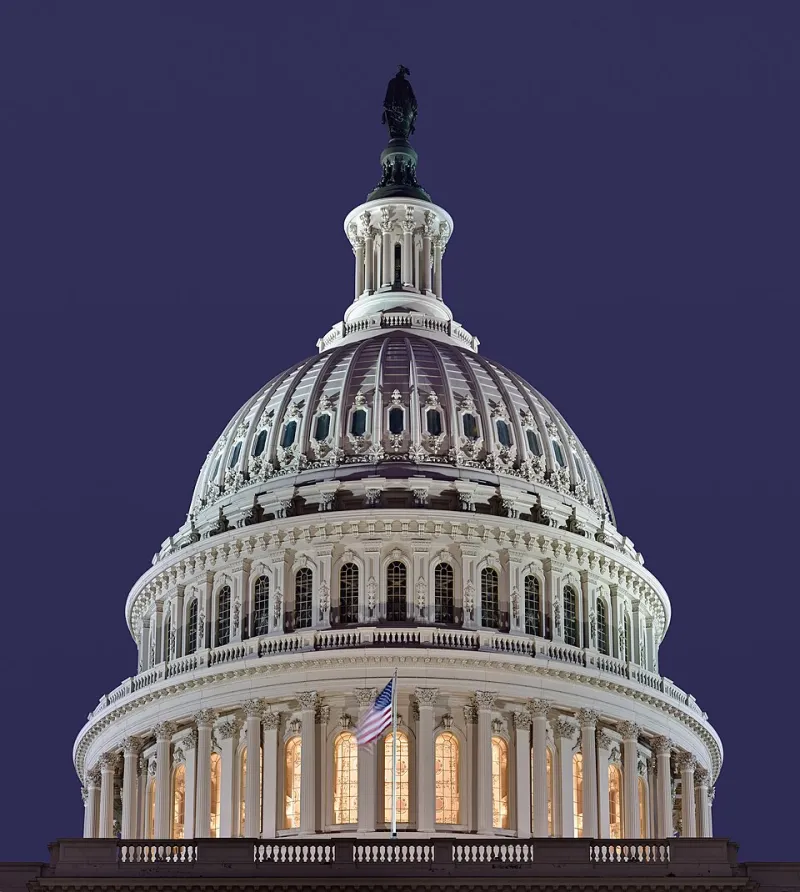
Photo: Diliff, CC BY 2.5, via Wikimedia Commons
When members of Congress depart Capitol Hill for lucrative positions inside the technology industry, they carry with them something more valuable than any patent or product roadmap: intimate knowledge of how the legislative machine operates. A DOE News investigation examines how major tech corporations have systematically recruited former lawmakers to blunt regulatory threats, and what that talent exodus means for the government's capacity to hold the industry accountable.
The Currency of Institutional Knowledge
To understand why a technology company would pay a former senator or House member several times their government salary, one must first appreciate precisely what that individual brings to the table. It is not their name recognition alone, nor their Rolodex of personal contacts, though both carry considerable weight. What the industry is purchasing, according to ethics watchdogs and former congressional staffers interviewed for this report, is a granular understanding of procedural leverage — a working knowledge of which subcommittees matter, which legislative aides hold genuine influence, and how to time a lobbying push so that it lands at the precise moment a bill is most vulnerable to amendment.
"These companies are not hiring former members to write code," said one longtime congressional ethics attorney, who requested anonymity because of ongoing client relationships. "They are hiring them to translate. To take a regulatory threat and convert it into something manageable, or ideally, something that never reaches a floor vote."
The pattern has accelerated dramatically over the past decade, coinciding with the period during which Congress first began seriously contemplating comprehensive federal oversight of data privacy, algorithmic accountability, and platform liability. As legislative pressure mounted, the technology sector's appetite for Washington insiders grew in direct proportion.
Mapping the Pipeline
Publicly available lobbying disclosures and financial filings reveal a striking concentration of former legislators now embedded within the government affairs and public policy divisions of the country's largest technology firms. Companies including major social media platforms, cloud computing giants, and consumer electronics conglomerates have collectively hired dozens of former members of Congress and senior committee staff over the past eight years.
The strategic logic is transparent upon examination. A former member who served on the House Energy and Commerce Committee — the panel with primary jurisdiction over telecommunications and internet regulation — arrives at a technology company's Washington office with a precise map of that committee's internal dynamics. They know which members are persuadable, which are performative in their criticism, and which staff directors actually draft the legislative language that shapes policy outcomes.
In several documented cases, the departure of a senior committee member to a major technology firm coincided within months with the stalling of legislation that had appeared to have genuine momentum. While causation is difficult to establish definitively, the temporal proximity has drawn scrutiny from government accountability organizations that track the revolving door between Capitol Hill and the private sector.
The Cooling-Off Illusion
Federal law imposes what are commonly described as "cooling-off" restrictions on former members of Congress. Senators face a two-year prohibition on directly lobbying their former colleagues; House members are restricted for one year. On paper, these provisions appear to create a meaningful buffer between legislative service and corporate advocacy.
In practice, ethics experts argue, the restrictions are riddled with gaps that render them largely symbolic. A former lawmaker who joins a technology company as a "vice president of global policy" or a "senior advisor for government affairs" need not register as a lobbyist at all, provided their direct contact with current members of Congress remains beneath the legal threshold. They can brief internal teams, shape strategy, prepare testimony for company executives, and cultivate relationships with current staff — all without triggering a single disclosure requirement.
"The cooling-off period was designed for a different era," said a former Federal Election Commission official who now studies post-government employment practices. "It doesn't account for the sophistication of modern corporate government affairs operations, where the most valuable work happens several steps removed from any direct contact that would require registration."
What Congress Loses
The consequences of this pipeline extend beyond the individual transactions that occur when a lawmaker accepts a technology sector offer. The cumulative effect, analysts contend, is a progressive hollowing-out of Congress's institutional capacity to engage the industry from a position of genuine expertise.
When a senior member of a technology-focused subcommittee departs, they frequently take their most experienced staff with them, either directly or through the broader network of departures their exit catalyzes. The institutional memory embedded in those relationships — the understanding of technical nuance, regulatory history, and legislative strategy — migrates to the private sector. What remains on the Hill is often a reconstituted team that must spend years rebuilding the competency that walked out the door.
This dynamic creates what some observers describe as a structural asymmetry: the technology industry's Washington operations grow progressively more sophisticated with each acquisition of experienced legislative talent, while Congress's oversight capacity is periodically reset. Hearings in recent years, during which members of both parties visibly struggled to pose technically coherent questions to technology executives, have been widely cited as evidence of this widening gap.
The Premium Price of Political Access
Compensation data, where it can be pieced together from public filings and voluntary disclosures, suggests that major technology companies pay substantial premiums for former legislators relative to other senior policy hires. Total compensation packages for former members placed in senior government affairs roles have been reported in ranges that dwarf congressional salaries, with equity grants and performance bonuses that align the individual's financial interests directly with the company's regulatory outcomes.
This financial architecture creates incentives that critics argue are structurally corrosive. A former lawmaker whose equity vests over four years has a direct monetary stake in ensuring that the legislation they once might have championed does not become law. The financial instrument that rewards their service is, in a meaningful sense, a bet against the regulatory process they once administered.
Calls for Reform, and the Resistance They Face
Proposals to extend cooling-off periods, broaden the definition of lobbying activity, and impose stricter disclosure requirements on post-congressional employment have surfaced repeatedly in both chambers. They have encountered resistance not only from industry advocates but from members of Congress who are themselves potential beneficiaries of the current arrangement.
Legislation introduced in recent sessions that would have extended the Senate cooling-off period to four years and required broader disclosure of policy-shaping activities failed to advance beyond committee consideration. Critics of those reform efforts argued they were too broad; supporters contended the opposition reflected a straightforward conflict of interest among those positioned to benefit from the status quo.
For now, the pipeline continues to operate with minimal friction. Former members of Congress continue to arrive in Silicon Valley and in Washington's K Street corridors carrying the institutional knowledge that tech companies prize. The industry grows more fluent in the language of Capitol Hill. And the body charged with regulating that industry continues to watch its most experienced voices walk toward better-compensated horizons.
The question that accountability advocates keep returning to is a simple one: if the people who understand the technology industry best are being systematically recruited away from government and into the industry itself, who, precisely, is left to hold it accountable?