Dark Money, Statehouse Doors: The Corporate Lobbying Web Quietly Rewriting Your State's Laws
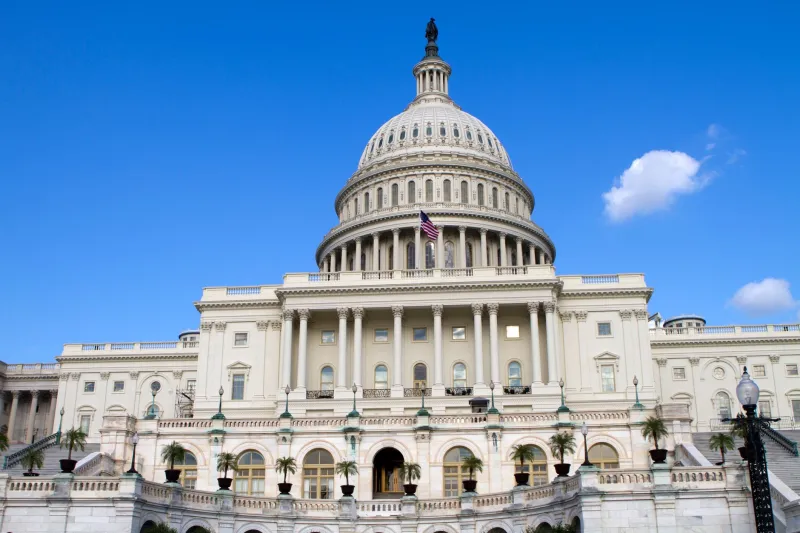
Washington gets the cameras. The statehouses get the results.
For every federal lobbying disclosure that generates a news cycle, dozens of state-level financial relationships operate in near-total obscurity — shaping property tax policy in Texas, pharmaceutical pricing rules in Ohio, environmental permitting standards in Pennsylvania, and labor regulations in Florida. The donors funding these efforts are frequently the same corporate interests visible in federal campaign finance records. The difference is that at the state level, the rules governing disclosure are weaker, the dollar amounts required to achieve influence are dramatically smaller, and the legislative outcomes are often more durable.
This is a guide to understanding that system — who is funding it, where it is strongest, and how ordinary citizens can begin to trace the money flowing through their own districts.
Why State Legislatures Are the Real Prize
The logic of state-level lobbying investment is straightforward: regulatory decisions made in a statehouse frequently govern industries more directly than federal rules, and they cost far less to influence. A gubernatorial race in a mid-sized state can be decided by a margin that a single well-funded 501(c)(4) organization — a so-called "social welfare" nonprofit that is not required to disclose its donors — can meaningfully affect with a seven-figure expenditure.
By comparison, moving the needle in a U.S. Senate race typically requires nine-figure commitments. The return on investment calculus, for a corporation seeking favorable regulatory treatment, points overwhelmingly toward the statehouse.
This dynamic has accelerated since the Supreme Court's 2010 Citizens United decision, which removed limits on independent political expenditures by corporations and nonprofit organizations. The subsequent proliferation of 501(c)(4) groups — which can engage in political activity as long as it is not their "primary" purpose, a standard that has proven remarkably elastic in practice — created a vehicle through which corporate interests could fund state-level campaigns and issue advocacy without any public disclosure of the underlying donors.
The Key Players: A Network Map
The State Policy Network (SPN) Perhaps the most consequential and least publicly recognized infrastructure in state-level conservative policy advocacy, the State Policy Network is an umbrella organization connecting more than 160 affiliated think tanks and advocacy groups across all 50 states. Member organizations — bearing names like the Mackinac Center for Public Policy in Michigan, the Goldwater Institute in Arizona, and the Caesar Rodney Institute in Delaware — produce model legislation, fund research, and maintain relationships with statehouse legislators that translate directly into introduced bills.
Funding for SPN affiliates flows substantially from corporate foundations, including those connected to major energy, pharmaceutical, and financial services companies. Because individual affiliates file as educational nonprofits, donor disclosure requirements are minimal.
The American Legislative Exchange Council (ALEC) ALEC operates as a membership organization for state legislators and corporate representatives, convening working groups that produce "model bills" — template legislation that member legislators can introduce in their home states. Critics describe the arrangement as corporations effectively co-authoring the laws they will subsequently be regulated by. Supporters characterize it as a policy research resource for legislators with limited staff capacity.
ALEC's membership and funding have shifted since a wave of corporate departures followed public scrutiny in the early 2010s, but the organization remains active and influential, particularly in Republican-controlled statehouses. Its issue areas include tort reform, energy regulation, voting procedures, and occupational licensing — each of which carries significant financial stakes for identifiable corporate interests.
Arabella Advisors' Managed Network On the progressive side of the ledger, the consultancy Arabella Advisors manages a network of nonprofits — including the New Venture Fund, the Sixteen Thirty Fund, and the Windward Fund — that collectively channel hundreds of millions of dollars annually into left-leaning state-level advocacy, ballot initiative campaigns, and voter mobilization efforts. Like their conservative counterparts, these organizations are structured to minimize donor disclosure.
The Sixteen Thirty Fund alone reported revenues exceeding $400 million in a single recent fiscal year, making it among the largest dark money vehicles in American politics regardless of ideological orientation.
State-by-State: Where Corporate Influence Is Most Concentrated
Florida: The insurance and real estate industries maintain an exceptionally tight relationship with the Florida Legislature, reflected in years of favorable treatment on property insurance regulation and development permitting. The state's campaign finance disclosure rules cover direct contributions but leave significant gaps around independent expenditure committees.
Texas: Energy sector lobbying — spanning oil, natural gas, and increasingly the renewable energy industry — represents the dominant financial force in the Texas Legislature. The state's biennial legislative sessions create concentrated windows of influence that well-resourced lobbying operations are structurally positioned to exploit.
Pennsylvania: Pharmaceutical and healthcare interests have invested heavily in Pennsylvania legislative races, coinciding with ongoing legislative debates over drug pricing, Medicaid managed care contracts, and hospital consolidation rules that carry enormous financial implications for those industries.
Wisconsin: Since the passage of Act 10 in 2011, Wisconsin has been a sustained battleground for corporate and labor interests, with dark money flowing into judicial elections — which determine how state laws are ultimately interpreted — at levels that would have been historically unprecedented.
Arizona: The school choice movement, substantially funded by a network of donors with financial interests in the private education sector, has used Arizona as a laboratory for voucher and education savings account legislation that has since been replicated across multiple states.
How to Track Lobbying Money in Your Own District
The opacity of state-level campaign finance is real, but it is not impenetrable. The following tools and methods allow engaged citizens to begin mapping financial relationships in their own communities.
1. Your State's Campaign Finance Database Every state maintains some form of campaign finance disclosure database, though the quality, searchability, and update frequency vary enormously. The National Conference of State Legislatures maintains a directory of state disclosure portals. Search your state legislator's name directly to identify their top donors and any affiliated PACs.
2. OpenSecrets.org While primarily focused on federal finance, OpenSecrets maintains data on state-level dark money activity and provides contextual analysis of national donor networks with state-level tentacles. Their "Outside Spending" database is particularly useful for identifying 501(c)(4) groups active in your state.
3. FollowTheMoney.org The National Institute on Money in Politics operates FollowTheMoney.org, which aggregates state campaign finance data across all 50 states into a searchable, standardized format. It is the single most useful tool for cross-state comparison of donor patterns.
4. IRS Form 990 Filings Nonprofit organizations are required to file Form 990 with the IRS, and these documents — searchable through ProPublica's Nonprofit Explorer — disclose revenue, expenditures, and the names of the highest-paid employees and contractors. While donor identities remain protected for most nonprofit categories, 990 filings can reveal the financial scale of advocacy organizations active in your state and trace grant relationships between national funders and local groups.
5. State Lobbyist Registration Records Separate from campaign finance, most states require lobbyists to register and disclose the clients they represent. These records — typically maintained by the secretary of state or a dedicated ethics commission — identify which corporations are paying for direct legislative access on specific issues.
The Accountability Gap
The persistence of dark money in state politics is not an accident. It reflects a series of deliberate legal and regulatory choices — some made by legislatures, others by courts — that have systematically weakened the disclosure infrastructure that makes democratic accountability possible.
Until that infrastructure is strengthened, the most effective countermeasure available to citizens is attention: to the model legislation appearing simultaneously in multiple states, to the think tank reports that seem to materialize precisely when a legislative debate requires a supporting data point, and to the donor networks whose fingerprints, however faint, appear consistently across otherwise unrelated political campaigns.
The money is moving. The question is whether enough people are watching.